Title here
Summary here
Facing key advertising challenges? Take control of your tracking: audit, optimization, GDPR compliance, CMP, Consent Mode v2, and server-side tagging.
Contact LucasGoogle Analytics is still today one of the best-known analytics tools to measure the traffic of a website. Yet many companies are now looking for a Google Analytics alternative that is easier to use, more privacy-friendly or better suited to their actual needs. Between GDPR considerations, the protection of personal data and the complexity of GA4, several Google Analytics competitors have taken an important place on the market.
Whether you’re looking for a minimalist web analytics tool, a powerful product-oriented solution or a platform hosted in Europe, there are now excellent Google Analytics alternatives. Some focus on simplicity, others on privacy or on advanced features.
Google Analytics has established itself for years as the benchmark for measuring the audience and performance of a website. Used by millions of companies, this analytics tool allows you to track many marketing and behavioral data points.
Despite its popularity, certain limitations linked to the complexity of its configuration, the use of GA4 or privacy concerns are pushing many professionals today to look for more suitable Google Analytics alternatives.
Google Analytics is a web analytics software developed by Google. It allows you to analyze the data of a website in order to better understand user behavior, traffic sources and marketing performance.
Google Analytics is used to measure digital performance and make better marketing decisions. It allows you to:
Good to know
Despite its many features, Google Analytics is not always the ideal solution depending on your technical level, legal constraints or business needs!
Choosing a new analytics tool, migrating your data or making your tracking reliable can quickly become technical, especially when you have to manage Google Tag Manager, conversions or a consistent measurement plan. I can support you as a freelancer on GTM, GA4 and Server-Side Tracking to audit, fix or structure reliable tracking of your marketing data. Contact me to discuss your needs!
There are now several Google Analytics alternatives capable of meeting varied needs: GDPR compliance, ease of use, advanced analytics or stronger privacy protection. Here are the best options to know:
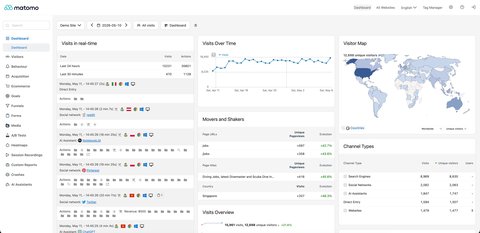
Matomo is probably the best-known Google Analytics alternative on the market. Formerly named Piwik, this web analytics tool is particularly appreciated by companies wishing to keep control of their data and strengthen their GDPR compliance.
One of the great advantages of Matomo is the ability to host the solution on your own servers or to opt for a cloud version. This allows for better control of user data and limits dependence on external services. Matomo can also be deployed via Google Tag Manager to simplify tracking and tag management. Many companies actually choose to configure Matomo with Google Tag Manager in order to more easily centralize their scripts and measurement events.
Strengths:
Limitations: sometimes more technical to get started with, interface less intuitive for some users.
Ideal for: SMBs, institutions, e-commerce, companies sensitive to privacy.
Pricing: free version available, paid plans depending on needs.
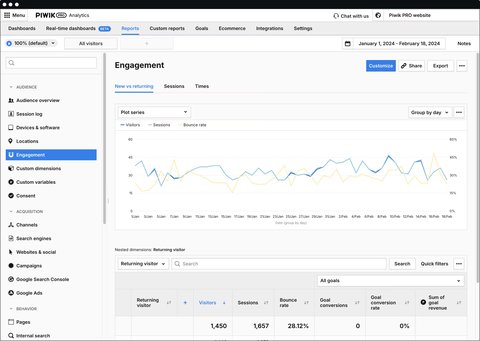
Piwik PRO is a premium analytics solution designed for organizations with strong requirements in terms of security and data protection. It is one of the most credible Google Analytics competitors for large accounts. The platform offers a complete suite including analytics, consent management, tag manager and customer data platform. This global approach can appeal to organizations wishing to centralize several tools.
Strengths:
Limitations: higher cost than simpler alternatives.
Ideal for: finance, healthcare, public administrations, large enterprises.
Pricing: free offer available with usage limits, then paid plans on quote depending on the company’s needs.
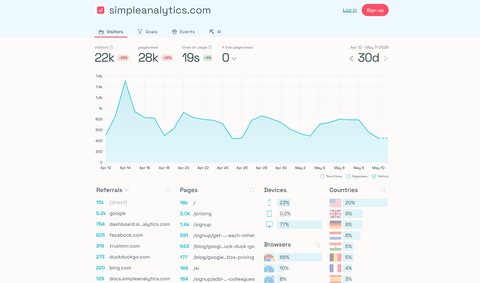
Simple Analytics positions itself as a Google Analytics alternative designed to get straight to the point. The tool appeals to companies that want to track their traffic without getting lost in dozens of complex reports. Its minimalist interface allows you to quickly visualize page views, traffic sources, campaigns or essential conversions. The solution also emphasizes respect for privacy.
Strengths:
Limitations: less suited to very advanced analyses or to large data volumes.
Ideal for: freelancers, SMBs, blogs, showcase websites.
Pricing: free trial, then paid subscriptions starting at around €15/month depending on traffic volume.
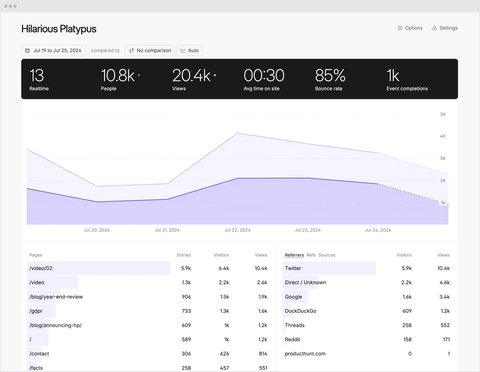
Fathom Analytics is a modern analytics tool focused on privacy, speed and simplicity. It is one of the most appreciated Google Analytics alternatives among companies that want to limit intrusive tracking. The interface is deliberately stripped down and goes straight to the point: traffic, sources, popular pages, goals and key statistics. This makes it an excellent option for executives or marketing teams looking to save time.
Strengths:
Limitations: fewer advanced features than a tool like GA4.
Ideal for: small businesses, SMBs, SaaS, web agencies.
Pricing: free trial, then paid plans starting at around $15/month depending on the number of page views.
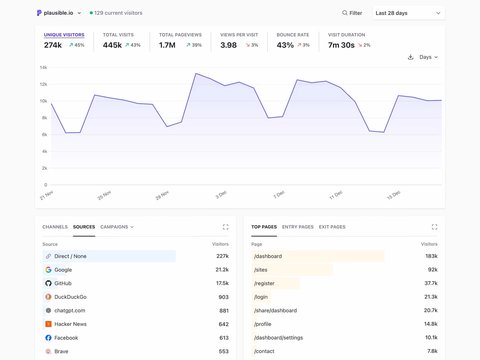
Plausible is an open source solution very popular in Europe. It targets companies looking for a lightweight, modern Google Analytics alternative that complies with current expectations regarding privacy. The tool offers a single, particularly readable dashboard, with main statistics immediately accessible: traffic, page views, sources, conversions and campaigns.
Strengths:
Limitations: less analytical depth for large enterprise needs.
Ideal for: startups, SMBs, media, content creators.
Pricing: free trial, then paid subscriptions starting at around $9/month depending on website traffic.
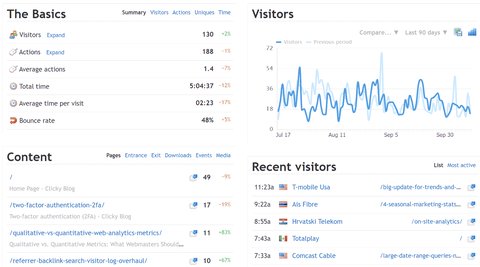
Clicky is a long-standing web analytics tool that continues to be used thanks to its real-time statistics. It can represent a good Google Analytics alternative for users who want an immediate read on performance. Clicky also offers heatmaps, individual visitor tracking and easy-to-understand reports.
Strengths:
Limitations: older design, less modern image than other solutions.
Ideal for: small structures, blogs, site administrators.
Pricing: free version available for one site, then paid plans depending on the number of sites and the desired features.
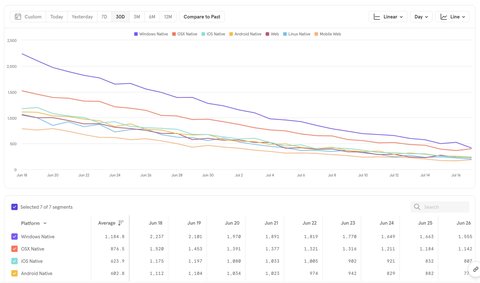
Mixpanel is more focused on product analytics than on simple web analytics. It is designed to track user events and understand journeys within a digital product. If your priority is activation, retention or conversion rate in an application or a SaaS, Mixpanel can be more relevant than Google Analytics.
Strengths:
Limitations: less suited to a classic showcase site.
Ideal for: SaaS, mobile applications, digital products.
Pricing: free plan available, then scalable pricing based on the volume of events analyzed.
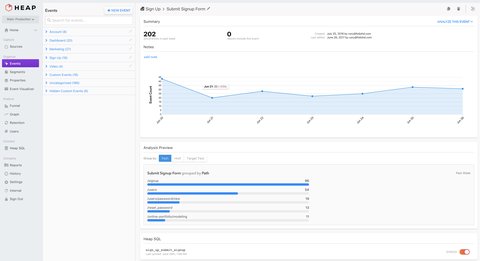
Heap is known for automating data collection without requiring as much manual event configuration. The tool captures many events automatically, which can save valuable time for product teams. This approach is particularly suitable for companies wishing to quickly analyze usage without launching heavy tracking projects.
Strengths:
Limitations: sometimes high cost depending on the volume of data.
Ideal for: scale-ups, SaaS, large companies.
Pricing: free version available, then paid plans on quote depending on the volume of data and analytics needs.
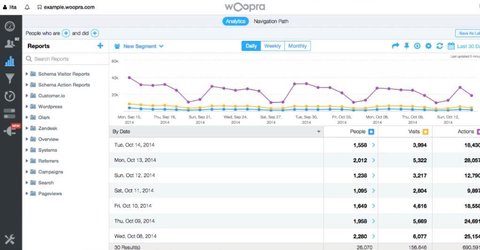
Woopra focuses on customer lifecycle analysis and understanding the user journey across several channels. The platform connects marketing, product and customer relations. It is a good Google Analytics alternative for companies wishing to go beyond simple traffic statistics.
Strengths:
Limitations: more complex for a classic analytics need.
Ideal for: SaaS, customer success, data-driven companies.
Pricing: free plan available, then paid subscriptions depending on the number of actions tracked and integrations required.
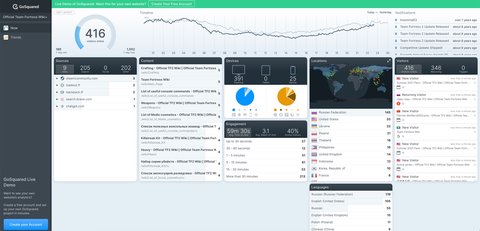
GoSquared combines analytics, live chat and customer relationship tools in a single suite. This approach can interest companies wishing to centralize several marketing needs. The tool emphasizes real-time data and ease of reading.
Strengths:
Limitations: less specialized than a pure analytics tool.
Ideal for: SMBs, startups, customer support, agile marketing teams.
Pricing: free trial, then paid plans starting at around £9/month depending on the chosen modules.
The right choice always depends on your actual needs, your budget and the level of precision expected in data analysis.
The choice of the best Google Analytics alternative depends above all on your business goals and the type of website you operate. An e-commerce site, for example, will look to track conversions, profitable traffic sources, top-performing product pages or cart abandonment rate. Conversely, a SaaS or mobile application will need more to analyze the user journey, retention or account activation!
For a blog, a media or a showcase site, a simple analytics tool can be largely enough. The key is therefore to choose a solution aligned with your real needs rather than a software that is too complex and of which you will only use a small part of the features.
For many companies, data protection has become a priority criterion. Between the recommendations of regulatory bodies like France’s CNIL, the growing expectations of users and the issues linked to privacy, certain Google Analytics alternatives stand out clearly!
Tools like Matomo, Piwik PRO, Plausible or Fathom Analytics have specifically been designed to offer audience measurement that is more respectful of personal data. European hosting, limitation of cookies, better control of collected information or a privacy-first approach: these solutions can represent a strategic choice for companies concerned about compliance.
The budget naturally remains an important criterion in choosing a web analytics tool. Some Google Analytics alternatives offer a free version or accessible plans for small structures, while others target large enterprises with more comprehensive and more expensive offerings.
You therefore need to compare the price, but also the real value provided: advanced reports, real-time data, heatmaps, conversion funnels, marketing integrations, customer support or cloud hosting. In many cases, a paid solution that is simple and well used can be more profitable than a free tool that is poorly configured.
My advice
List the features really essential to your business before choosing. You will avoid paying for useless options or limiting your growth with a tool that’s too basic.
Google Analytics remains a market reference, but it is no longer the only solution for analyzing a website’s performance. Depending on your priorities in terms of simplicity, data protection, GDPR compliance or advanced features, several Google Analytics alternatives can now better meet your needs.
The right choice will depend above all on your goals, your budget and the level of analysis expected. The point isn’t to use the best-known tool, but the one that will allow you to really exploit your data and make better decisions for your business.
A question about this article, need an audit of your setup or server-side migration? Drop me a line, I reply within 24h.
Not all Google Analytics 4 events carry the same weight. Discover which ones to track based on your activity: e-commerce, lead generation or SaaS.

Discover how to install Google Analytics (GA4) on WordPress: 6 simple to advanced methods
Find out which automatic events to keep or disable, their limitations and how to configure them correctly.
 Lucas Rollin